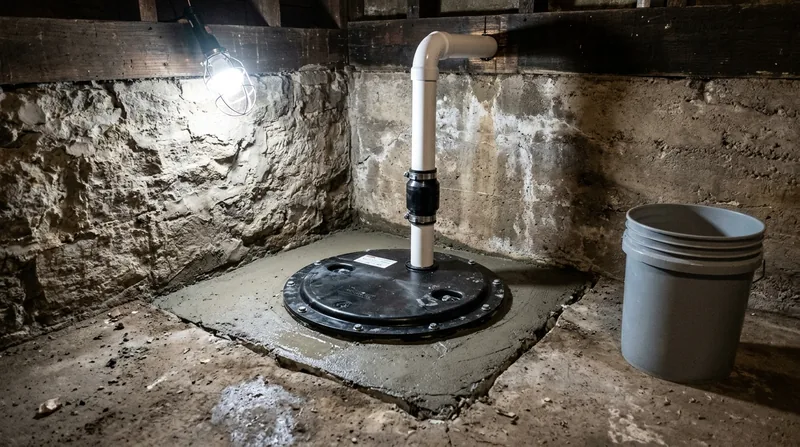




Little Rock sits where the Ouachita foothills drop into the Arkansas River valley, and that geography decides how water moves under your house. On the western hills, expansive shrink-swell clay sits over shale and sandstone, so spring storms send water sheeting downslope and straight into foundation drains that were never sized for it. In Riverdale and across the river in North Little Rock, river-bottom ground holds water after the kind of rain that flooded the area in 2019. If your sump pump is undersized, unsealed, or simply dead, that water ends up on your basement floor. Sump Pump Installation & Replacement in Little Rock is the work we do most, and we do it with pumps sized to the actual drainage load of your house, sealed basins, working check valves, and discharge lines that carry water far enough from the foundation to stay gone. When a pump fails during a spring thunderstorm, the phone call comes at 2 a.m., which is why we treat this as urgent work, not a someday project. If you are still mapping out the whole system, start with our basement waterproofing overview before you commit to a single component.
Why Sump Pump Failure Hits Little Rock Basements So Hard
Most of the housing stock here was not built with a sump pump in mind. Quapaw Quarter and MacArthur Park Victorians have brick cellars on old lime-mortar foundations, Hillcrest bungalows and Tudors have shallow partial basements, and the 1950s to 1970s ranches in Walton Heights and Leawood often drained by gravity alone. When the water table rises after a heavy spring system, gravity stops being enough and hydrostatic pressure finds every weak point. A pump that quits is the difference between a damp wall and two inches of standing water.
- Shrink-swell clay on the western hills swells against foundation walls and pushes water toward the footing drain faster than an old pump can move it.
- Homes in Chenal Valley and Pleasant Valley with walk-out lower levels collect water at the low side, where a single undersized pump has no backup.
- Long humid summers and occasional ice storms leave discharge lines clogged or frozen, so the pump runs but the water comes right back.
- Original cast-iron or clay drain tile in pre-1950 homes cracks and silts in, sending grit into the basin that burns out the pump impeller.
- Spring thunderstorms and tornado events like March 2023 dump rain faster than any gravity drain can shed it, which is exactly when a working pump matters most.
We see the same pattern repeatedly: a homeowner in Hillcrest replaces the pump, and the new one fails within two seasons because the basin was never sealed and the discharge line still dumps water six inches from the wall.
Key info: A home in the Heights on a sloped lot may need a pump sized for a 20-inch rise in the water table during a storm, while a ranch in Sherwood on flatter ground needs far less capacity. We measure the actual inflow, not the square footage, before we recommend a pump.
Permits for work that alters drainage or the sanitary connection of a sump discharge vary by jurisdiction, so confirm requirements with the City of Little Rock building department before scheduling. The City of Little Rock publishes current permit guidance online.
How We Install or Replace a Sump Pump in Little Rock
We start by finding out where the water actually comes from. That means checking the footing drain, the interior perimeter drain if one exists, the grading around the foundation, and the downspout extensions. A pump is only as good as the drainage feeding it, and we will tell you plainly when the real fix is an interior drain tile system rather than a bigger pump. Once we know the inflow, we size the basin and pump, then route the discharge to a point that stays dry.
- We inspect the basement, the basin, the check valve, and the discharge line, and we measure how fast water enters during a rain event.
- We cut and set a new sump basin at the low point of the drainage system, sealed against groundwater and radon entry at the lid.
- We install a properly sized pump with a check valve and a discharge line pitched to drain fully, then route it to a daylight outlet or a dry well well away from the foundation.
- We test the float switch through several cycles and confirm the pump keeps up with a simulated storm flow.
- We walk you through what to check monthly and what a failing pump sounds like, so you are not learning it at 2 a.m. in a thunderstorm.
Every job ends with a wet test, not a promise. If the pump cannot keep up with the water we put to it, we do not call the job done.
Key info: A 1990s brick home in Maumelle with a walk-out basement had a pump discharging into a flower bed three feet from the wall. The water ran straight back to the footing. We re-routed the discharge 15 feet downslope and the basement stayed dry through the next spring, with no new pump needed.
If the pump is part of a larger moisture problem, our interior drain tile system page shows how the basin ties into the perimeter drain. For homes where the pump handles a lot of water and power loss is a real risk, add a battery backup sump pump so a storm outage does not turn into a flooded floor.
Sump Pump Approaches We Use in Little Rock Homes
Not every basement needs the same setup. A Victorian cellar in the Quapaw Quarter with a brick floor and no existing basin gets a different answer than a 2010s Chenal Valley walk-out with a pre-formed pit. The table below shows the approaches we use and where each one fits.
| Approach | Description | Best for |
|---|---|---|
| New sump pit and pump | Cut and set a sealed basin at the low point, size the pump to measured inflow, add a check valve and full discharge routing. | Older Little Rock homes with no existing pit or a crumbling one. |
| Pump replacement only | Swap a failed or undersized pump in an existing sealed basin, verify the float and check valve, and test under flow. | Basins in good shape where the pump is the weak link. |
| Discharge line correction | Re-pitch and re-route the line to a daylight outlet or dry well at least 10 to 15 feet from the foundation. | Homes where the pump runs but water returns to the wall. |
| Sealed basin with backup | Gasketed lid, sealed penetrations, primary pump plus a battery backup for power loss during storms. | Homes that flood during thunderstorms and outages. |
| Pump tied to interior drain tile | Basin set to receive the perimeter drain, with the pump sized for the full drainage load of the system. | Basements with hydrostatic pressure and no working footing drain. |
We choose the approach after the inspection, not before. If a simple pump swap solves it, that is what we quote.
Sump Pump Installation & Replacement Cost in Little Rock: What to Expect
Most straightforward pump replacements in Little Rock start from $1,200, and a full new pit with a sealed basin and corrected discharge runs higher. The number moves with the size of the pump, whether a new basin has to be cut, how far the discharge line must run, and whether the job ties into an existing interior drain. Homes on the western hills with heavy clay inflow often need a larger pump than the square footage suggests, which is a real cost factor, not an upsell.
We recommend getting two or three estimates and asking each contractor what pump model, what basin size, and where the discharge will terminate. A quote that does not answer those three questions is not a quote yet. Our pricing page lays out the full range so you can compare apples to apples before anyone shows up.
Hiring a Sump Pump Contractor Near Little Rock: What to Check
This is not a job where the cheapest bid wins. Ask for proof of license and insurance, and ask for the certificate, not just a verbal yes. Request references from jobs in your part of town, because a pump that works in Maumelle may be undersized for a Heights lot with more slope. Confirm who pulls the permit if the discharge connection requires one, and check any HOA rules before the discharge line is routed. A contractor who hesitates on any of these questions is telling you something.
We are a Basement Health Association member, and we will show you our insurance certificate and references before you sign anything. Call our contact page or (501) 710-4186 to schedule a free inspection and get a straight answer on what your basement actually needs.
Sump Pump Installation & Replacement in Little Rock: Pricing Guide
| Service | Price | Details |
|---|---|---|
| Sump pump replacement | Starting at $1,200 | Includes new pump, check valve, float test, and discharge check in an existing basin. |
| New sump pit and pump | Starting at $1,850 | Cut and sealed basin, sized pump, full discharge routing to a dry outlet. |
| Sealed basin with battery backup | Starting at $2,400 | Gasketed lid, primary pump plus battery backup for storm outages. |
| Pump tied to interior drain tile | On estimate | Scope depends on drain length, basin location, and measured inflow before pricing. |
| Travel | Included | In Little Rock and surrounding areas, no separate call-out or mileage fee. |
| Estimate | Free | Response within 24h at (501) 710-4186, no obligation to book. |
Indicative pricing, the exact cost depends on square footage, finish, and site access. Free personalized estimate within 24h at (501) 710-4186.


