



French Drain Installation in Little Rock: Built for Hillside Lots and River-Bottom Ground
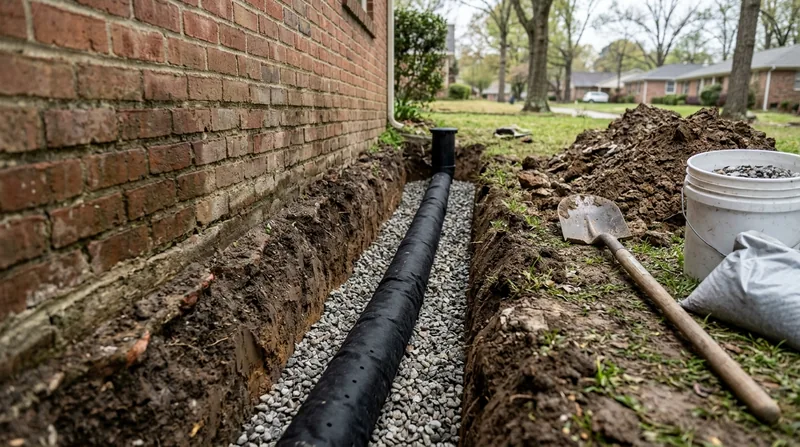
Little Rock sits where the Ouachita foothills drop into the Arkansas River valley, and that geography decides how water moves across your lot. On the western hills, expansive shrink-swell clay over shale sheds runoff fast and pushes it downhill into foundations. In Riverdale and North Little Rock, the ground is river-bottom fill that flooded in 2019 and still holds water long after the rain stops. French Drain Installation in Little Rock is the exterior interception step: we cut a graded trench along the foundation wall, lay perforated pipe in washed gravel wrapped in filter fabric, and send that water to daylight or to a sump basin before it ever reaches your lower level. If you are already seeing seepage inside, start with a basement waterproofing assessment so we treat the source and not just the symptom.
Why Little Rock Lots Push Water Against the Foundation
The dominant failure mode here is not a single cracked wall. It is hydrostatic pressure from saturated clay and runoff arriving from uphill. A Hillcrest bungalow on a 1920s lot with mature oaks and hickories can take water from three directions at once: roof discharge at the downspout, surface flow off the neighbor's higher grade, and a water table that rises after a spring thunderstorm. The clay does not drain; it swells, holds, and releases slowly against the footing.
- Uphill runoff crosses the lot and ponds against the wall because the original grading has settled over decades.
- Downspouts discharge within two feet of the foundation instead of extending four to six feet away.
- Shrink-swell clay over shale keeps the water table perched, so the footing drain never gets a dry cycle.
- Old brick cellars in the Quapaw Quarter sit on lime-mortar foundations that wick moisture rather than shed it.
A properly graded exterior drain gives that water a path of least resistance that is not your basement wall. We confirm the direction of flow with a free basement inspection before we quote a single linear foot.
Key info: In Chenal Valley and Pleasant Valley, homes step down the hillside with walk-out lower levels. On those lots the uphill side carries the most water, so the drain run and the discharge point matter more than the total length of pipe.
For the regulatory side, drainage work that alters how stormwater leaves a lot can trigger a permit review. Verify requirements with the City of Little Rock building department before work begins, because thresholds vary by jurisdiction and by whether the discharge ties into a sanitary connection.
How We Install an Exterior French Drain on a Little Rock Foundation
We work from the outside in, and we do not open a trench until we know where the water is coming from. The sequence below is what a typical hillside job in the Heights or Stifft Station looks like, from the first walkthrough to backfill. We hand-dig where the trench runs within a few feet of a mature oak root plate or a gas line, and we machine-dig the long straight runs.
- We walk the lot and mark the high side, the low side, and every downspout outlet so the drain follows the actual grade.
- We excavate a trench roughly 12 to 18 inches wide down to just below the footing line, sloped a minimum of one inch per ten feet toward the outlet.
- We line the trench with filter fabric so clay fines cannot clog the gravel over time.
- We set perforated pipe with the holes down, surround it with washed gravel, and wrap the fabric over the top.
- We tie the run to daylight on a downhill slope or into a sump basin with a check valve on the discharge line.
- We backfill, compact in lifts, and restore the grade so surface water still sheds away from the wall.
Where the drain terminates in a basin, we size the pump to the run and add a battery backup sump pump so a spring storm that knocks out power does not turn the basin into a bucket. If the existing footing drain is collapsed or silted, we fold that repair into the same excavation instead of digging twice.
Key info: A 1950s brick ranch in Leawood had water entering at the downhill corner after every heavy rain. The uphill neighbor's grade sent runoff across the property line. We ran 60 feet of exterior drain along the uphill wall, extended two downspouts, and tied the outlet to a new basin. The corner stayed dry through the next spring storm cycle.
Exterior Drain Approaches We Use in the Little Rock Metro
Not every lot needs the same system. The table below shows the approaches we install most often and the site conditions each one fits. We pick based on grade, soil, and where the water actually enters.
| Approach | Description | Best for |
|---|---|---|
| Gravel and perforated pipe to daylight | Fabric-wrapped trench along the wall, sloped to a downhill outlet. | Hillside lots in the Heights and Chenal Valley with a usable fall. |
| Exterior drain tied to a sump basin | Drain run discharges into a basin with a pump and check valve. | Flat or river-bottom lots in Riverdale and North Little Rock. |
| Footing drain replacement | Remove collapsed or silted original weeping tile and rebuild the run. | Older homes where the original drain has failed or clogged. |
| Surface collection and downspout extension | Catch basins and extended leaders that move roof water away from the wall. | Lots where most water arrives at the downspout, not the soil. |
Every one of these ends with the same test: we run water and watch where it goes before we call the job done.
French Drain Installation Cost in Little Rock: What to Expect
Pricing starts at $25 per linear foot for a standard exterior run in open ground with good access. That figure covers excavation, filter fabric, perforated pipe, washed gravel, and backfill. What moves it up is site condition, not square footage: a trench hand-dug around an oak root plate in Hillcrest, a run that has to go under a concrete walk, or a lot where the only outlet is a basin and pump. A short run on a Maumelle lot with easy machine access lands near the low end; a deep run on a steep Chenal Valley slope with a basin and discharge line lands well above it.
Get two or three written estimates and compare scope, not just the number. Ask each contractor how deep the trench goes, whether the outlet is daylight or a basin, and what happens to the excavated soil. The full pricing overview breaks down the line items so you can read each bid against the same list.
Choosing a French Drain Contractor Near Me in Little Rock
Drain work is easy to do badly and hard to see once the trench is backfilled. The contractor you hire should be able to explain the slope, the outlet, and the fabric wrap in plain terms. Use the checklist below before you sign anything, and call us at (501) 710-4186 if you want a second opinion on a bid you already have.
- Confirm the contractor is licensed and insured for excavation and drainage work, and ask for a certificate of insurance.
- Get at least two written estimates with the same scope so you compare like for like.
- Ask for references from jobs in your part of the metro and call them.
- Ask who pulls the permit if the work alters drainage or ties into a sanitary connection.
- Check HOA rules before excavation if you live in a planned community like Maumelle or Chenal Valley.
We are a Basement Health Association member and we will tell you when a simple crack seal is enough and when the real problem is hydrostatic pressure that needs a drain. Reach out through our contact page to schedule a free inspection.
French Drain Installation in Little Rock: Pricing Guide
| Service | Price | Details |
|---|---|---|
| Standard exterior French drain | Starting at $25/linear ft | Includes excavation, filter fabric, perforated pipe, washed gravel, and backfill in open ground with machine access. |
| Drain tied to sump basin and pump | Starting at $1,800 | Adds basin, pump, check valve, and discharge line for flat or river-bottom lots without a daylight outlet. |
| Hand-dug run near tree roots or utilities | On estimate | Hand excavation around mature oak root plates or gas lines needs an on-site look before a number is given. |
| Footing drain replacement | On estimate | Removing collapsed or silted original weeping tile and rebuilding the run requires inspection of the existing drain. |
| Travel | Included | In Little Rock and surrounding areas, no separate call-out or mileage fee. |
| Estimate | Free | Response within 24h at (501) 710-4186, no obligation to book. |
Indicative pricing, the exact cost depends on square footage, finish, and site access. Free personalized estimate within 24h at (501) 710-4186.


