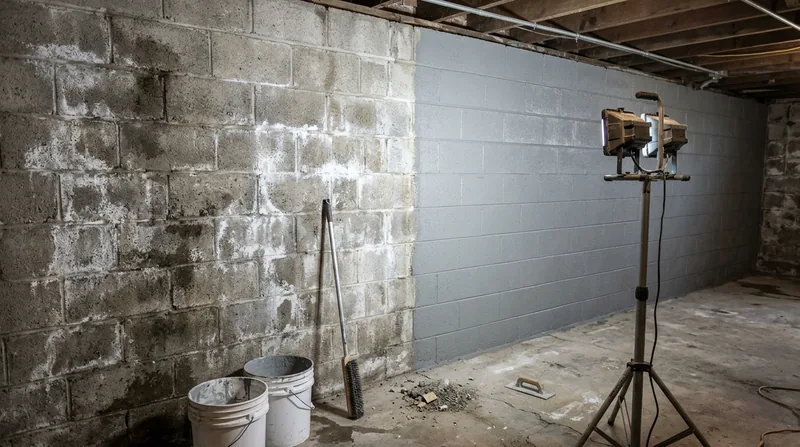




If you have damp patches, white powder on the masonry, or a musty smell that comes back every spring, Basement Wall Sealing in Little Rock is usually the first thing to look at. Our city sits where the Ouachita foothills drop into the Arkansas River valley, and that geology drives the problem: expansive shrink-swell clay over shale and sandstone on the western hills, and river-bottom ground in Riverdale and North Little Rock that took on water in 2019. Homes here range from 1880s brick cellars on lime mortar in the Quapaw Quarter to 1990s and newer brick homes stepping down the slopes of Chenal Valley, and each one handles moisture differently. We seal basement walls, remove efflorescence, and tell you honestly whether a sealer will fix what you are seeing or whether hydrostatic pressure is pushing water through and a sealer would only hide it for a season. Start with a free basement inspection and we will show you what the wall is actually doing.
Why Basement Wall Sealing Matters on Little Rock's Clay and Hillsides
Little Rock gets some of the region's heaviest rainfall, mostly in spring thunderstorms, and the clay under most of the metro does not drain quickly. Water stacks up against the foundation, finds the lime mortar joints in a Hillcrest bungalow or the cold joint in a Walton Heights split-level, and comes through as seepage. That seepage leaves efflorescence, that chalky white salt bloom, and keeps the wall surface damp long enough for mold growth to start on framing and stored materials.
- Sealing stops surface dampness and slows vapor movement through porous masonry.
- Efflorescence removal restores the wall so a sealer can actually bond.
- Sealing does not stop water being pushed in by hydrostatic pressure.
- Parging repairs honeycombed or eroded mortar before any coating goes on.
- Breathable sealers suit old brick cellars better than heavy membrane coatings.
We would rather tell you a sealer is the wrong tool than sell you one that fails by July.
Key info: A 1920s Craftsman in Hillcrest with damp walls and light efflorescence is a good sealing candidate. A 1970s ranch in Leawood with water running across the floor after every storm is a drainage problem, and sealing the wall will not stop it.
For the official word on what work needs a permit in our jurisdiction, check the City of Little Rock building department before you schedule anything structural.
How We Seal Basement Walls in Little Rock, Step by Step
Every job starts with reading the wall, not with a bucket of sealer. We look for the water table line, check for efflorescence patterns, tap the mortar, and test whether moisture is coming through the face of the wall or up from the footing. Then we match the method to the cause, because a membrane sealer over an active leak traps water inside the masonry and makes it worse.
- We inspect the wall, the footing, and the grading outside to find where the water originates.
- We remove efflorescence and loose mortar with wire brushes and a masonry cleaner.
- We patch cracks and honeycombed areas with hydraulic cement or a masonry patch.
- We apply parging where the wall face is too rough for a sealer to bond.
- We roll or spray the penetrating or membrane sealer in two coats at the manufacturer's rate.
- We extend downspouts and correct grading so roof water leaves the foundation.
If the inspection shows active hydrostatic pressure, we stop and talk about a interior drain tile system instead, because that is the repair that actually manages water under the floor.
Key info: In a 1950s brick ranch in Briarwood, we cleaned heavy efflorescence off three walls, parged two eroded patches, and applied a breathable sealer. That home had damp walls, not standing water. A home two streets over with water on the floor after storms needed drain tile, and we said so.
Sealing Methods We Use and When Each One Fits
Not every wall wants the same product. Old lime-mortar brick in the Quapaw Quarter needs to breathe, while a poured wall in Chenal Valley can take a membrane. The table below shows how we decide.
| Approach | Description | Best for |
|---|---|---|
| Penetrating sealer | Sinks into the masonry and blocks capillary suction while staying breathable. | Damp brick and block walls, older homes with lime mortar. |
| Membrane sealer | Forms a flexible film on the wall face that resists vapor and light seepage. | Poured concrete walls in good condition with no active pressure. |
| Efflorescence removal and prep | Masonry cleaner, wire brushing, and rinsing to open the pores for bonding. | Any wall with salt bloom, chalky residue, or failed old coatings. |
| Parging and crack patching | Hydraulic cement and masonry patch fill voids and honeycombed mortar. | Eroded mortar joints and rough wall faces before sealing. |
| Crack injection | Epoxy or polyurethane injection ports seal a structural crack from the inside. | Distinct vertical cracks that leak, where sealing alone will not hold. |
We choose the method after the inspection, not before, because the wrong product on the wrong wall is money spent twice.
Basement Wall Sealing Cost in Little Rock: What to Expect
Most wall sealing work in Little Rock starts around $1,500 and moves up from there. That figure covers a typical basement with efflorescence removal, prep, and sealer on the accessible walls. The number grows with wall height, square footage, how much parging or crack patching is needed, and whether we have to move stored items to reach the wall.
Access matters more than people expect. A walk-out lower level in Pleasant Valley with a clear wall is faster than a partial basement in the Heights where the wall runs behind furnace equipment and shelving. Older brick cellars in MacArthur Park often need more prep because the mortar is soft and the efflorescence is heavy. Getting two or three estimates is smart, and so is asking each contractor what they will do if the wall turns out to be under hydrostatic pressure.
Our full pricing overview breaks down the ranges so you can compare like for like.
Hiring a Basement Wall Sealing Contractor Near Little Rock
Ask three things before anyone touches your wall: are you licensed and insured, will you put the scope in writing, and can you show me a job like mine. A contractor who seals every wall the same way has not looked at your foundation. We are a Basement Health Association member and carry liability and workers' compensation coverage, and we will send a certificate on request.
Permits are commonly required for structural foundation work and for anything that alters drainage or the sanitary connection of a sump discharge, and the rules vary by jurisdiction, so confirm with the local building department. If your home is in a historic district or under an HOA, check those requirements before work starts as well. Call us at (501) 710-4186 or use the contact page to set up a free inspection and a written estimate.
Basement Wall Sealing Near Me: What Little Rock Homeowners Should Know
The phrase "near me" matters less than the diagnosis. A sealer is a surface treatment, and it works when the problem is damp masonry and efflorescence. It does not work when water is being pushed through by hydrostatic pressure, when the water table rises against the footing, or when a downspout dumps roof water two feet from the wall. In those cases the honest answer is drainage first, sealing second.
Little Rock's spring storms and long humid summers keep walls wet for months, and that is when efflorescence and musty smells show up. If you see white bloom, call for an inspection before you paint over it. If you see water on the floor, call for an inspection before you buy sealer. Either way, the inspection is free and the recommendation is based on what your wall is doing, not on what we would like to sell.
Basement Wall Sealing in Little Rock: Pricing Guide
| Service | Price | Details |
|---|---|---|
| Single wall sealing with prep | Starting at $1,500 | Covers efflorescence removal, prep, and two coats of sealer on one accessible wall. |
| Full basement wall sealing | Starting at $2,800 | All accessible walls, with cost driven by square footage and how much parging is needed. |
| Efflorescence removal and parging only | Starting at $900 | Prep work for walls with heavy salt bloom or eroded mortar before any sealer is applied. |
| Crack injection add-on | Starting at $450 | Epoxy or polyurethane injection for a leaking vertical crack that sealing alone will not hold. |
| Complex or large-scale job | On estimate | Walk-out lower levels and walls blocked by equipment need an on-site look before pricing. |
| Estimate | Free | Response within 24h at (501) 710-4186, no obligation to book. |
Indicative pricing, the exact cost depends on square footage, finish, and site access. Free personalized estimate within 24h at (501) 710-4186.


