



Bowing Wall Repair in Little Rock
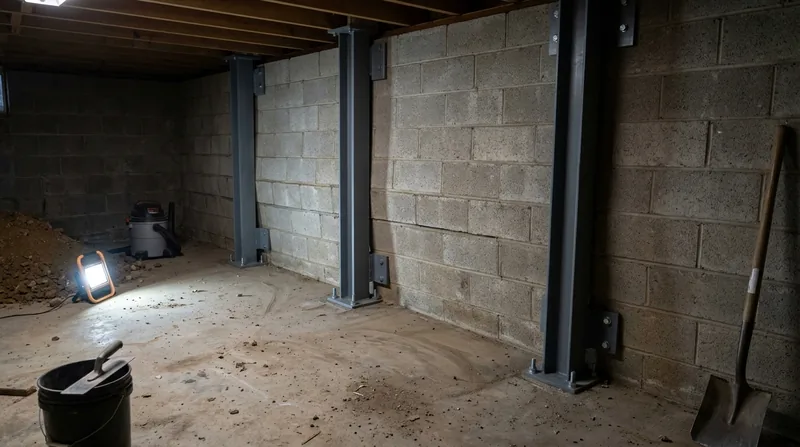
Little Rock sits where the Ouachita foothills drop into the Arkansas River valley, and that geology drives most of the wall movement we see. The expansive shrink-swell clay on the western hills swells hard after spring thunderstorms, then shrinks back through long humid summers, and it pushes relentlessly against older block and brick foundation walls. Hillcrest bungalows, the Heights and Stifft Station homes on sloped lots, and 1950s brick ranches in Walton Heights all carry walls that were never engineered for that kind of lateral load. If a wall in your basement is leaning inward or has a visible horizontal crack, Bowing Wall Repair in Little Rock is the work that stops the movement instead of hiding it. We stabilize the wall with carbon fiber straps, steel I-beams, or wall anchors sized to the severity of the bow and the soil behind it. Call (501) 710-4186 and we will tell you honestly whether you need structural stabilization or just crack sealing. Start with a free basement inspection so we can measure the bow before anyone quotes a number.
Why Bowing Walls Are Common in Little Rock's Clay and Hillside Neighborhoods
A bowing wall is rarely a sudden event. In Little Rock it develops over years as clay soil absorbs water, expands against the foundation, and relaxes again when the ground dries. The wall bows inward at mid-height, a horizontal crack opens near the middle course, and the top of the wall often stays plumb while the bottom kicks out. On the sloped lots in the Heights and Chenal Valley, the uphill side carries extra soil load, so a partial basement wall can lean years before anyone notices. You can spot the early signs yourself: a wall that no longer lines up with a floor joist, doors that stick at the top of the basement stairs, or diagonal step cracks running from the corners.
- Horizontal cracks in the middle third of a block or brick wall signal lateral pressure, not settling.
- A wall that leans inward more than an inch over eight feet needs structural stabilization, not patching.
- Efflorescence and damp block along the bowed section tell you water is feeding the clay behind the wall.
- Older lime-mortar cellars in the Quapaw Quarter move differently than modern poured walls and need gentler anchoring.
- Spring thunderstorms and rapid snowmelt recharge the clay fast, which is when movement accelerates.
If you see any of these signs, get the wall measured before the next wet season adds more load.
Key info: A 1950s brick ranch in Walton Heights with a walk-out lower level had a rear wall bowing nearly two inches at mid-height. The cause was clay pushing against the wall on the uphill side combined with a downspout that dumped roof water right at the footing. We anchored the wall and corrected the discharge in the same visit.
Structural foundation repair in Little Rock requires a permit in most cases, and the rules are set by the City of Little Rock Building Codes Division. Check their planning and development portal before work begins, because requirements vary by scope and inspectors want to see the engineering behind the anchor design.
How We Diagnose and Stabilize a Bowing Wall in Little Rock
We do not quote a bowing wall from a photo. The first step is a walkthrough of the basement and the grade outside, because the fix depends on which side is pushing and how much movement has already happened. We measure the bow with a plumb line and a laser, map the cracks, and check the footing drain and grading on the uphill side. Then we match the repair to the wall type: carbon fiber straps for block walls with moderate movement, steel I-beams for poured walls that need real stiffness, wall anchors when the soil load is high and we can get to the outside. On the river-bottom ground in Riverdale and North Little Rock, the water table sits high after heavy rain, so we also look at whether hydrostatic pressure is driving the movement before we anchor anything.
- We inspect the interior wall, the exterior grade, and the footing drain to find the source of the lateral load.
- We measure the bow, the crack widths, and the wall height to calculate how much stabilization the wall needs.
- We pull the permit with the City of Little Rock and schedule the inspection before we install.
- We excavate to the footing where anchors are required, or prep the interior face for straps and beams.
- We install carbon fiber straps, steel I-beams, or wall anchors and torque them to the engineered spec.
- We correct the water source with grading, downspout extensions, or drainage so the clay stops recharging against the wall.
- We re-measure the wall, document the before and after, and hand you the transferable warranty.
Every job ends with a written record of the movement so you can track it over the years.
Key info: A Hillcrest bungalow had a block wall bowing at the middle course with a horizontal crack running twelve feet. Carbon fiber straps on the interior face stopped the movement without excavating the mature oak roots along the property line. The homeowner kept the garden and the wall stayed put through the next spring's storms.
If the inspection shows water is the real driver, we coordinate the structural repair with foundation waterproofing so the clay stops pushing against a wall we just stabilized.
Repair Methods We Use and When Each One Fits
There is no single answer for a bowing wall. The right method depends on the wall material, the amount of movement, the soil load, and whether we can get to the outside of the foundation. Here is how we match the approach to the wall in front of us.
| Approach | Description | Best for |
|---|---|---|
| Carbon fiber straps | Epoxy-bonded straps run vertically from the top plate to the footing, adding tensile strength to the wall face. | Block walls with moderate bowing and no footing movement |
| Steel I-beams | Galvanized beams set against the wall and tied into the floor and joists to resist inward pressure. | Poured walls with significant movement or heavy clay load |
| Wall anchors | Earth anchors driven into stable soil outside, connected through the wall to an interior plate. | Walls that have moved more than two inches and need to be pulled back |
| Epoxy injection | Structural epoxy fills and bonds non-moving cracks so water and air stop passing through. | Stable cracks that are not actively widening |
| Drainage correction | Grading, downspout extensions, and footing drain work to lower the soil load behind the wall. | Walls where hydrostatic pressure is the main driver |
We often combine two methods on one wall, because stabilizing the structure without fixing the water source just delays the next problem.
Bowing Wall Repair Cost in Little Rock: What to Expect
Pricing for bowing wall repair starts at From $600 for the smallest scope, which is typically a short section of non-moving crack injection or a minor strap installation on a small basement wall. Most real bowing wall jobs in Little Rock land well above that starting point, because the cost tracks the number of straps or beams, the wall length, the access to the footing, and whether we need to excavate outside. A single-wall carbon fiber job on a Hillcrest bungalow is a different number than a full anchor system on a Chenal Valley walk-out where the excavation is deep and the clay is heavy. Older brick cellars in the Quapaw Quarter with lime mortar can also take more prep time, because the anchors have to be set without cracking the historic masonry.
Get two or three estimates and compare the scope, not just the total. One contractor may quote straps only, while another includes the drainage correction that stops the load from coming back. Ask each one how they measured the bow and whether the permit and inspection are included. You can see the full range of our rates on the pricing page before you call.
Key info: Access drives cost more than anything else. A wall with a clear interior face and room to work goes faster than a finished basement where we have to protect flooring and work around framing. The same bow in Maumelle can price differently than in Briarwood for that reason alone.
Bowing Wall Repair Near Me: How to Choose a Contractor Near Little Rock
When you search for bowing wall repair near me, the list you get is mostly general foundation firms and a few specialists. Ask each one the same questions before you sign anything. Confirm they carry liability insurance and workers' compensation, and ask for a certificate rather than a verbal yes. Ask whether they pull the permit themselves or leave it to you. Ask for two or three recent references on bowing wall jobs, not crack sealing, and call them. If the wall is on a lot with protected trees or an HOA with exterior rules, raise that in the first conversation so the scope accounts for it.
We are a Basement Health Association member and we work only on below-grade and foundation issues, which means the crew on your wall does this every week. Reach out through the contact page and we will set up the inspection, measure the bow, and give you a written scope with the permit path spelled out.
Bowing Wall Repair in Little Rock: Pricing Guide
| Service | Price | Details |
|---|---|---|
| Crack injection on a stable wall | Starting at $600 | Epoxy or polyurethane injection for non-moving cracks, priced by linear feet of crack treated |
| Carbon fiber strap installation | Starting at $1,200 | Interior straps bonded from top plate to footing, priced per strap and wall height |
| Steel I-beam stabilization | Starting at $2,500 | Galvanized beams tied into floor and joists, priced by beam count and wall length |
| Wall anchor system | On estimate | Exterior excavation and earth anchors sized to soil load and movement, needs on-site engineering |
| Travel | Included | in Little Rock and surrounding areas, no separate call-out or mileage fee |
| Estimate | Free | Response within 24h at (501) 710-4186, no obligation to book |
Indicative pricing, the exact cost depends on square footage, finish, and site access. Free personalized estimate within 24h at (501) 710-4186.


