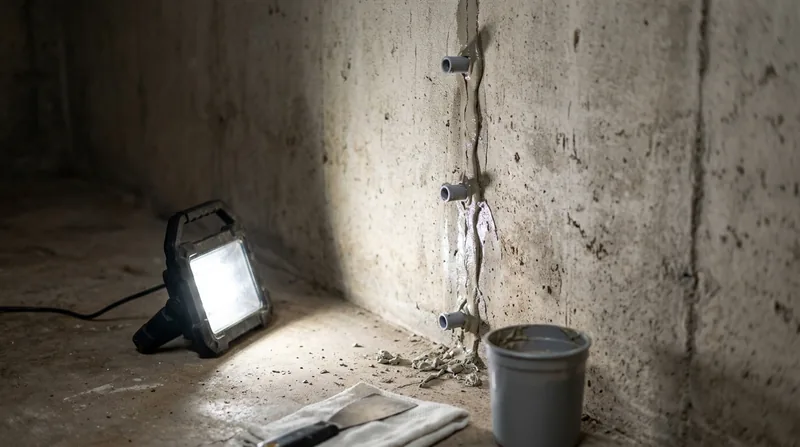




Little Rock sits where the Ouachita foothills drop into the Arkansas River valley, and that geology writes the rules for every foundation in town. West of I-430 you have expansive shrink-swell clay over shale and sandstone. Down in Riverdale and across the river in North Little Rock you have river-bottom ground that took on water in 2019. Add spring thunderstorms, tornadoes like the March 2023 outbreak, and long humid summers, and the cracks show up fast. Foundation crack repair in Little Rock is not a cosmetic chore here. It is how you stop a hairline in a Hillcrest bungalow from becoming a wet basement by June. We inject non-structural cracks with epoxy or polyurethane, and we brace structural movement with carbon fiber or wall anchors when the clay has been working on a wall for decades. Call (501) 710-4186 and we will tell you plainly which one you actually need. Start with a free basement inspection if you are not sure what you are looking at.
Why Foundation Cracks Open Up in Little Rock Homes
The dominant failure mode in this city is clay movement, not frost. Little Rock's shrink-swell clay pulls away from the footing in a dry August and swells hard against it after a spring storm. A 1920s brick cellar in the Quapaw Quarter sits on old lime mortar that has been flexing for a century. A 1990s Chenal Valley walk-out is pinned into a hillside that drains a whole lot of water toward the rear wall. Both crack, just for different reasons.
- Hydrostatic pressure pushes water through hairline cracks after heavy rain, and you see it as a damp stripe on the wall.
- Shrink-swell clay cycles open vertical cracks at corners and around window wells as the soil heaves and settles.
- Sloped lots in the Heights and Stifft Station concentrate runoff against partial basement walls.
- White efflorescence on the block means water is moving through the wall and leaving mineral salts behind.
- Older brick cellars in MacArthur Park and the Quapaw Quarter crack along mortar joints before the brick itself gives.
If any of that sounds familiar, the crack is a symptom and the water is the disease. We treat both.
Key info: A split-level in Walton Heights with a stair-step crack at the rear corner is usually clay movement, not a failed footing. A vertical crack in a 1950s Leawood ranch that only seeps after rain is usually a water path. Same crack shape, two different repairs.
Permits for structural foundation repair vary by jurisdiction in the Little Rock metro, so confirm the current requirement with the City of Little Rock Planning and Development Department before any structural work begins. You can reach their permit desk through the City of Little Rock Planning and Development Department.
How We Diagnose and Repair a Foundation Crack in Little Rock
Every job starts below grade, at the wall, not at the crack alone. We map the crack, check the wall for bowing with a level and plumb line, and look at grading and downspout discharge on the outside. Then we match the repair to the cause. A stable non-structural crack gets injection. A wall that has moved gets structural work, and injection alone would be a waste of your money.
- We walk the basement and the exterior, note crack width, direction, and any efflorescence or dampness.
- We check for bowing, and we measure whether the wall is moving inward at the middle.
- We drill injection ports along the crack at the angle the wall construction calls for.
- We flush the crack, then inject epoxy for structural bonding or polyurethane for active leaks that need to stay flexible.
- We seal the surface, remove the ports, and confirm the repair holds before we leave.
- We tell you what grading or downspout changes will keep the water away from that wall.
If the crack is one part of a wet basement pattern, we will say so and point you to interior drain tile as the better answer than chasing cracks one at a time.
Key info: On a Maumelle walk-out with a leaking cold joint, polyurethane injection stops the active seep in a single visit. On a Bryant home with a stair-step crack and a bowing wall, we use carbon fiber straps and address the soil pressure, because injection would just crack again next spring.
Repair Methods We Use and When Each One Fits
There is no single right repair for every crack in Little Rock, and any contractor who says otherwise is selling one tool. The table below is how we decide, and we explain the choice to you before we drill a single port.
| Approach | Description | Best for |
|---|---|---|
| Epoxy injection | Structural epoxy bonds the crack faces back together and restores wall strength. | Stable, non-leaking vertical and hairline cracks in poured and block walls. |
| Polyurethane injection | Flexible foam expands into the crack and stops active water on contact. | Wet, seeping cracks and cold joints, especially after heavy rain. |
| Carbon fiber straps | Straps anchor the wall to the footing and the floor to resist inward movement. | Bowing block walls where the clay is pushing the middle inward. |
| Wall anchors | Anchors driven into stable soil outside pull the wall back toward plumb. | Walls that have moved and need to be straightened, not just held. |
| Parging and surface sealing | A repaired mortar coat closes surface defects before injection. | Rough or honeycombed block where the crack needs a clean surface. |
We choose the method after we see the wall, not before. If a bowing wall is the real issue, our bowing wall repair page covers the structural side in more detail.
Foundation Crack Repair Cost in Little Rock: What to Expect
Most single-crack injection jobs in the Little Rock metro start at $450, and that figure covers a straightforward vertical crack with good access. The number moves with crack length, wall thickness, whether the wall is poured concrete or 1920s brick, and whether we have to work around finished basement walls. Active leaks that need polyurethane and multiple ports cost more than a dry hairline.
Structural work is a different budget. Carbon fiber strapping and wall anchoring are priced per wall after an on-site look, because the number of straps and the soil conditions on a Chenal Valley hillside are not something we can quote from a photo. Anyone who gives you a structural number over the phone is guessing.
Get two or three estimates and compare what is actually included, not just the bottom line. Ask whether the price covers port drilling, injection material, surface sealing, and cleanup. Our full pricing overview lays out how we build a quote so you can compare apples to apples.
Choosing a Foundation Crack Repair Contractor Near Little Rock
Foundation crack repair is a below-grade trade, and the license and insurance that matter are the ones for structural and waterproofing work, not general handyman coverage. Ask for the certificate, not just a verbal yes. Ask how many basements the crew has injected in Pulaski County this year, and ask for two references in neighborhoods like Hillcrest or Pleasant Valley that you can actually call.
- Confirm the company carries liability and workers' compensation coverage and will send a certificate.
- Get at least two estimates in writing and compare the scope line by line.
- Ask whether a permit is required for your specific repair, and who pulls it.
- Check references from jobs at least one full rainy season old, so the repair has been tested.
- Ask what warranty comes with the work and whether it transfers if you sell the home.
If a contractor cannot answer those questions clearly, keep calling. Reach us through the contact page and we will walk you through the same checklist for your home.
Foundation Crack Repair Near Me: What Little Rock Homeowners Should Know
When you search for foundation crack repair near me in Little Rock, you will get a mix of dedicated waterproofing companies, general foundation repair firms, and plumbers. They are not the same. A plumber handles supply lines and drains, a general foundation firm may focus on piers and lifting, and a waterproofing specialist handles the water path and the crack itself. We do the below-grade work and nothing else.
The season you call matters. In Little Rock, the phone rings hardest in March and April after the first big spring storms push water through cracks that were dry all winter. The second wave comes in late summer, when the clay shrinks and new cracks show up on walls that looked fine in May. Ice storms and the occasional deep freeze add a smaller third wave. If you see efflorescence or a damp stripe now, book the inspection before the next storm finds it for you.
We serve Little Rock and the surrounding cities, including North Little Rock, Sherwood, Jacksonville, Maumelle, Cammack Village, and Bryant. If you are in one of those areas and the crack is seeping, call (501) 710-4186 and we will schedule a look.
Foundation Crack Repair in Little Rock: Pricing Guide
| Service | Price | Details |
|---|---|---|
| Single crack injection (epoxy or polyurethane) | Starting at $450 | Covers port drilling, injection material, surface sealing, and cleanup for one accessible crack. |
| Multiple crack injection | Starting at $750 | Priced per crack after inspection; wall length and access around finished walls move the number. |
| Carbon fiber wall strapping | On estimate | Requires an on-site look at bowing, wall construction, and soil pressure before strapping is quoted. |
| Wall anchor system | On estimate | Priced per wall after soil and access review; anchors are driven from the exterior. |
| Travel | Included | In Little Rock and surrounding areas, no separate call-out or mileage fee. |
| Estimate | Free | Response within 24h at (501) 710-4186, no obligation to book. |
Indicative pricing, the exact cost depends on square footage, finish, and site access. Free personalized estimate within 24h at (501) 710-4186.


